


Case Sharing - Hidden Ovaries: Segmental Uterine Aplasia and Ipsilateral Renal Agenesis in Ragdoll Cats

By Dr. Ryan Chuang

Today, we would like to share a rare but increasingly common congenital genetic disorder I have observed in my clinical practice, particularly among Ragdoll cats. This condition is known as Segmental Uterine Aplasia and Ipsilateral Renal Agenesis.
The Case of Jojo
Jojo is a two-year-old female Ragdoll who was adopted a year ago. Her owner was told she had already been spayed. However, the original surgeon noted that Jojo was born with only one side of the uterus and one ovary.
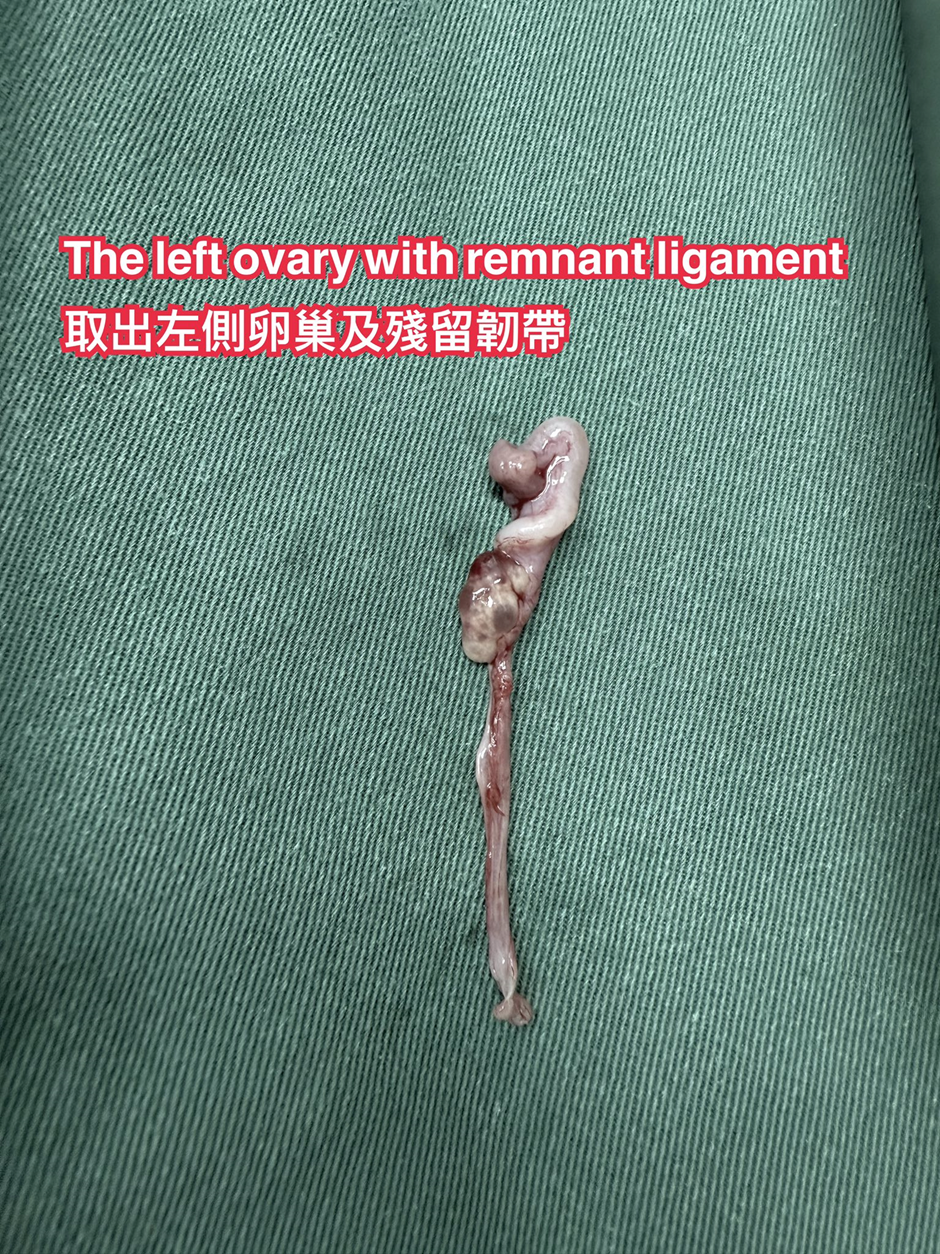
Since adoption, Jojo continually showed signs of being "in heat" (estrus). Hormonal tests at another clinic suggested that ovarian tissue was still present in her body. Seeking a solution, the owner brought Jojo to me for a second opinion.
The Diagnosis: More Than Meets the Eye
During the consultation, we performed an advanced abdominal ultrasound. The results were clear:
Residual Ovarian Tissue: I located ovarian tissue on the left side of the abdomen.
Missing Kidney: Jojo only had a right kidney; her left kidney had never developed.
This confirmed the diagnosis: Segmental Uterine Aplasia (missing part of the uterus) with Ipsilateral Renal Agenesis (missing the kidney on the same side).
Understanding the Condition
Don’t be intimidated by the long medical name. This congenital anomaly typically features:
A One-Sided Uterus: One "horn" of the uterus is missing, replaced only by thin connective tissue.
A Single Kidney: Usually, the kidney is missing on the same side as the missing uterine horn.
Two Ovaries: Crucially, even though the uterus and kidney are missing on one side, both ovaries are usually present. The reason for this developmental mismatch remains a mystery.
The Clinical Challenge
When a cat has this condition, a standard spay procedure often fails. A surgeon may see only one uterine horn and assume there is only one ovary. If the "hidden" ovary on the side with no uterus is not found and removed, the cat will continue to experience heat cycles.



Dr. Ryan’s Advice for Owners
With the rise of home breeding and inbreeding, we are seeing more of these genetic anomalies.
The Power of Ultrasound: Ovarian tissue is tiny. Detecting it requires high-resolution ultrasound equipment and a veterinarian with significant imaging experience.
The "One Kidney" Clue: During a pre-spay checkup, you can ask your vet to palpate (feel) for both kidneys. If only one is felt, it is a major red flag for this condition.
If your spayed cat is still showing signs of heat, or if you are planning to spay a Ragdoll, feel free to reach out for a consultation.
(Article by Dr. Ryan Chuang. Reproduction without permission is prohibited; sharing with original attribution is welcomed.)
🏥 Appointments & Inquiries
For any medical needs or assistance, please contact Paws and Tails Veterinary Hospital:
Phone:+852 2832 2836
WhatsApp:+852 9870 5711
Website:www.pawsandtailshk.com
Address:4 Po Yan Street, Sheung Wan, Hong Kong


Comments